Maaly Raw Built Philadelphia's Wildest Sound and Lil Uzi Vert Rode It to the Charts
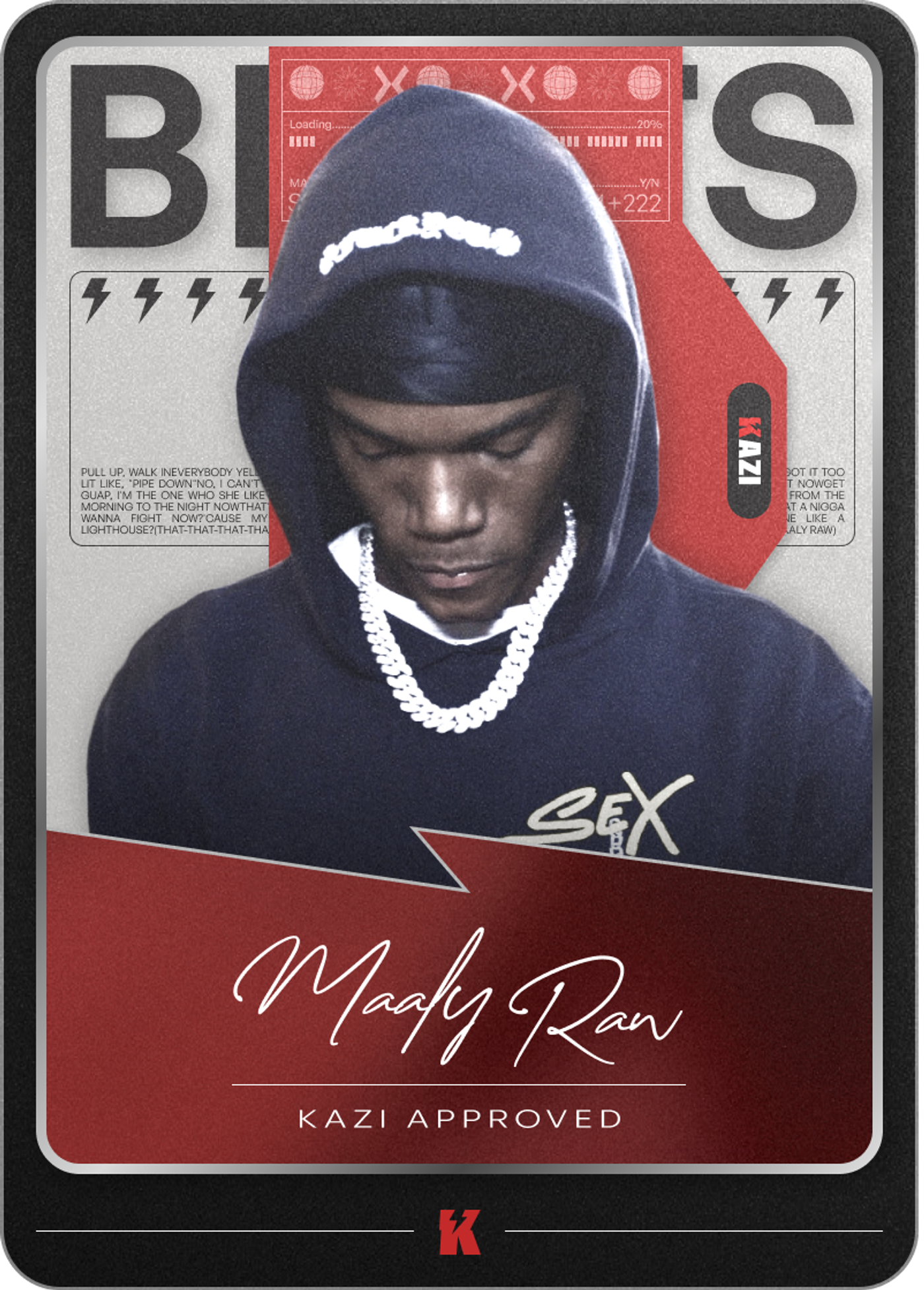
There is a specific feeling that Maaly Raw beats evoke, a kind of wicked unease that sits somewhere between a horror movie score and a lullaby. The Philadelphia producer, born Jamaal Talib Henry, spent the better part of the 2010s constructing skeletal, ominous soundscapes that became the foundation for Lil Uzi Vert's ascent from SoundCloud curiosity to chart-topping phenomenon. While other producers chased maximalism, Maaly Raw worked in negative space, building tracks around eerie melodies, minimal percussion, and an atmosphere so thick you could cut it with a knife. His work with Uzi on tracks like "XO Tour Llif3" and "The Way Life Goes" did not just define a partnership, it created a template for how melodic trap could sound unsettling and beautiful at the same time. Nearly a decade into his career, Maaly Raw remains one of the most distinctive voices in hip-hop production, a craftsman who understands that sometimes the scariest thing is what you leave out.
THE SOUND
Maaly Raw's production is immediately recognizable by what it refuses to do. Where contemporaries layer drums until the mix feels crowded, Maaly strips percussion down to hi-hats and spare 808s, letting melodies carry the emotional weight. His beats often begin with a single melodic element, a music box loop, a reversed piano sample, a synth line that sounds like it is floating through fog, and build around it with restraint. On "XO Tour Llif3," the production is almost skeletal, just a looped guitar melody, minimal drums, and enough space for Uzi's voice to crack and soar. The track became one of the biggest hip-hop songs of the 2010s, peaking at number seven on the Billboard Hot 100 in May 2017, and its success was as much about what Maaly Raw left out as what he put in.
His work on "The Way Life Goes" from Luv Is Rage 2 showcases another side of his approach, flipping a sample of Oh Wonder's "Landslide" into something melancholic and druggy, the kind of production that sounds like it is moving in slow motion. The drums hit with a lazy bounce, the melody drifts in and out of focus, and the whole thing feels like a memory you are trying to hold onto as it slips away. That track also charted, reaching number 38 on the Hot 100, and demonstrated Maaly's ability to make commercial music that still felt weird and personal. Even on more aggressive cuts, like "444+222," his beats maintain a sense of unease, melodies that sound vaguely threatening, percussion that lands just off-center from where you expect it.
The Maaly Raw tag, "That be Maaly Raw," delivered in a casual, almost dismissive tone, became one of the most recognizable producer signatures of the SoundCloud era. It does not announce itself with the bombast of a Metro Boomin tag or the urgency of a Southside tag. It just appears, matter-of-fact, like Maaly is reminding you he was here all along. That understated confidence mirrors his production style, he does not need to do the most because he knows exactly how much is enough.
THE RECEIPTS
Maaly Raw's discography is built on his partnership with Lil Uzi Vert, a creative relationship that began in Philadelphia's underground and scaled to stadium-level success. His credits on Luv Is Rage 2 include "XO Tour Llif3," "The Way Life Goes," and "444+222," a run of productions that helped the album debut at number one on the Billboard 200 in September 2017. On The Perfect LUV Tape, he placed "Do What I Want," "Of Course We Ghetto Flowers," and "Original Uzi (4 of Us)." On Lil Uzi Vert vs. The World, "Money Longer" went double platinum. Beyond Uzi, Maaly has worked with Meek Mill on Championships and with Playboi Carti on "Shoota" featuring Lil Uzi Vert.
His production on "XO Tour Llif3" earned multi-platinum certification from the RIAA, a commercial validation of a sound that initially felt too strange for radio. The track's success opened doors, but Maaly has largely stayed within his Philadelphia ecosystem, working with artists who understand his aesthetic rather than chasing placements with every major label star. That selectivity has kept his sound distinct, he has not diluted it by trying to fit into every trend. His work remains tethered to a specific vision, beats that sound like they were made at three in the morning in a dimly lit studio, melodies that feel like they are haunting you rather than entertaining you.
In interviews, Maaly has spoken about his process with a craftsman's precision, discussing how he builds loops, how he chooses sounds, how he knows when a beat is finished. He is not interested in mystique or mythology, just the work. That approach has earned him respect among producers who understand that consistency matters more than viral moments. He has been making beats since he was a teenager, learning production on his own, developing a style that did not sound like anyone else coming out of Philadelphia at the time. By the time he connected with Lil Uzi Vert in the mid-2010s, he had already spent years refining his sound, and that preparation made the partnership inevitable.
WHY KAZI APPROVED
Maaly Raw gets the stamp because he proved that restraint and atmosphere can drive commercial hits, and his aesthetic has proven durable while contemporaries shifted with trends. In an era where trap production often defaults to formulas, Maaly maintained a singular vision: beats that prioritize atmosphere over aggression, space over density. His work with Lil Uzi Vert on tracks like "XO Tour Llif3" and "The Way Life Goes" produced commercially successful records that helped define the 2010s SoundCloud era, and he established a sonic blueprint that resonated with SoundCloud-era producers who understood that sometimes the most powerful thing you can do is hold back.
His minimalist approach has remained relevant as trends shifted away from maximalist production. His work with Lil Uzi Vert remains the template for how to make trap production that feels singular and unsettling, not formulaic. Philadelphia has always had a distinct sound, from Philly soul to Meek Mill's street anthems, and Maaly Raw added a new chapter built on shadows and negative space. That is why Kazi is stamping him.