Jack White Proves Prolific Doesn't Mean Predictable
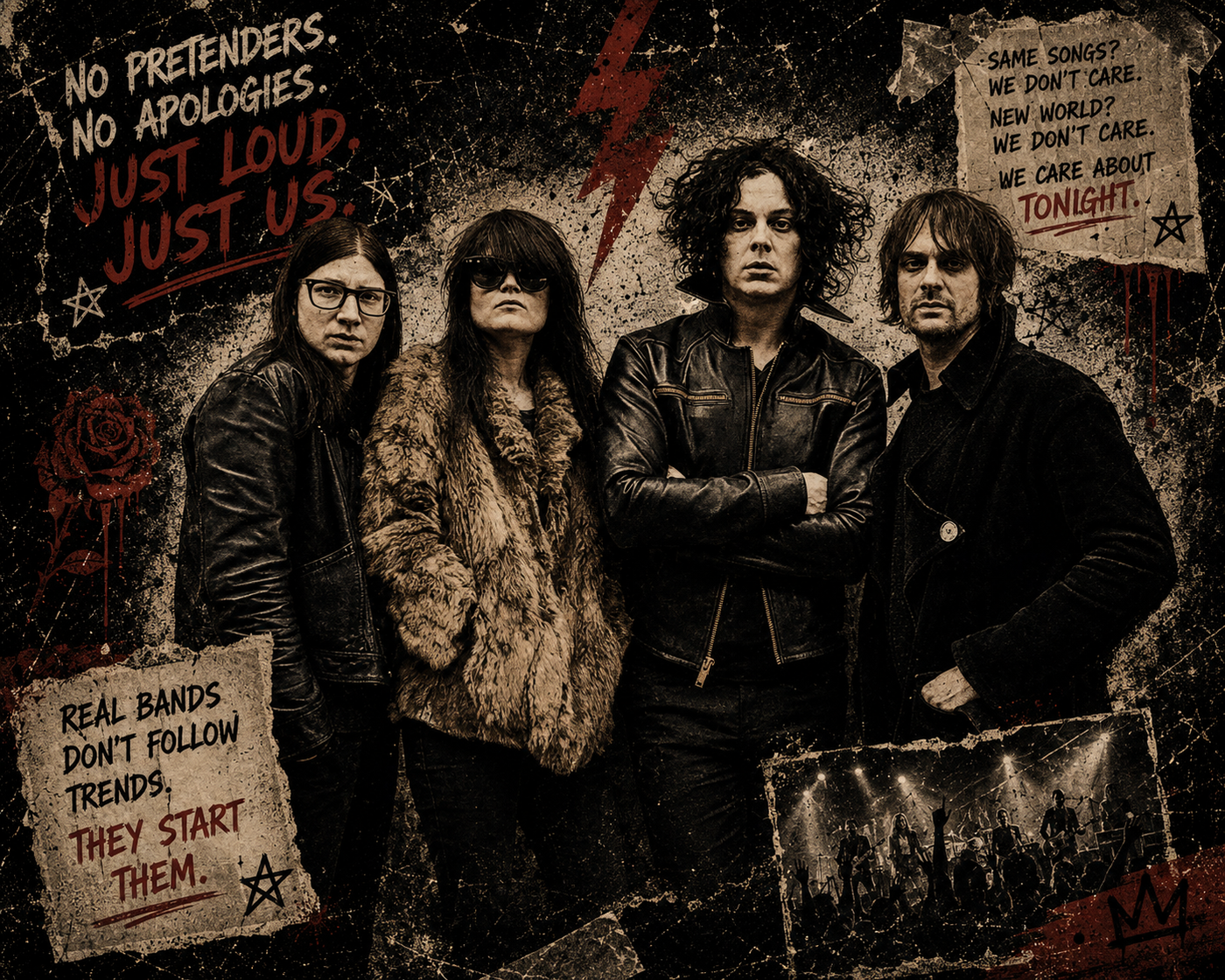
The opening guitar tone on No Name is a Harmony Rocket through a 1960s Fender Twin with the treble pulled back just enough to let the midrange bark. Jack White recorded this in 2023 and 2024 at Third Man Studio with Bill Skibbe mixing, and you can hear the room, the specific decision to let the drums bleed into the guitar mics, the choice to keep Olivia Jean's bass lines fat and front instead of tucked politely under the mix. This is garage rock that knows exactly what studio tools it's refusing to use. The surprise white label release in July 2024, slipped into bags at Third Man locations in Detroit, London, and Nashville without explanation, was the correct move. No Name does not announce itself. It corners you in a small room and makes you listen.
Jack White has spent two decades proving he understands lineage better than most rock critics. No Name pulls directly from the White Stripes' punk blues foundation, the same two-piece stomp that made Elephant sound like it was recorded in a Detroit basement even when it wasn't. But where the White Stripes locked into one aesthetic and rode it until it calcified, No Name keeps moving. Patrick Keeler's drums on the new singles, "G.O.D. and the Broken Ribs" and "Derecho Demonico," recorded with Dominic Davis on bass and Bobby Emmet on keys, show Jack White pulling from the Raconteurs' fuller arrangements without losing the raw edge that made his early work urgent. The lineage runs through Link Wray's distortion experiments, through the Detroit proto-punk of the MC5, through every band that chose aggression over polish and meant it.
The production detail that separates No Name from competent garage rock revival is in the space between instruments. Jack White knows when to let a chord ring and when to choke it dead. He knows the difference between a room mic six feet back and one pressed against the kick drum. On the No Name Live EP, mixed and mastered by Skibbe, you hear "Old Scratch Blues" from the Odeon Theatre in December 2024 and the recording captures not just the performance but the specific acoustics of a mid-sized rock room, the way the snare cracks differently when there are bodies absorbing the high end. Most live recordings from 2024 sound like they were processed through the same digital chains that flatten studio records. This one sounds like five hundred people heard something happen once and the tape was rolling.
The critical ceiling here is that Jack White is so technically skilled, so aware of rock history, that No Name occasionally feels like a demonstration instead of a document. The moments when his daughter Scarlett plays bass, when Olivia Jean locks into a groove that sounds like early Stooges rhythm section work, those are the moments when the record stops referencing and starts being. But there are tracks where you can hear Jack White thinking about what Jack White would do, and that self-awareness creates a distance the best garage rock doesn't allow. The White Stripes worked because Meg White's drumming was not technically impressive, it was simply correct for the song, and that limitation forced Jack White to write around the edges. No Name has no such limitations, and sometimes you miss the friction that comes from working against a constraint you didn't choose.
The GRAMMY nomination for Best Rock Album in 2025 confirms what the sold-out 2025 tour dates already proved: Jack White still commands attention in a genre that spent the last decade trying to decide if it was dead or just resting. The 35-date North American headline run kicking off in July 2026, the European festival circuit from Latvia to Kazakhstan, the fact that as of December 2024 all but five of his 2025 dates had sold out, this is not nostalgia booking. This is a working rock guitarist at the height of his technical ability making records that sound like they were torn out of 1969 and recorded yesterday.
No Name is not the best record Jack White has made. It is proof that prolific output does not mean diluted vision when the artist knows exactly which tools to use and which ones to leave in the case. The 2026 singles show he's not coasting. The live recordings prove the songs work in the rooms that matter. Jack White is still the most restless guitarist of his generation, still chasing the specific friction between garage simplicity and studio precision, and No Name is what happens when that chase produces something that demands your full attention because it refuses to make it easy.
More Rock
- Molly Hatchet Shares a "JacksonVillain" Lyric Video
- Make Them Suffer's "Black Sheep" Is Out, With a Video
- From Ashes to New's Reflections Deluxe, With "After Death"
- King 810's "Simulacra Simulating" Video Is Out
- GrimmING Announce Debut Album Jagatod, Share "Pankh" Video
- New Vision Share "Still Losing" Video Ahead of Can't Leave With Less