Dry Cleaning Found the Ceiling on Stumpwork, Then Hired Cate Le Bon to Break Through It
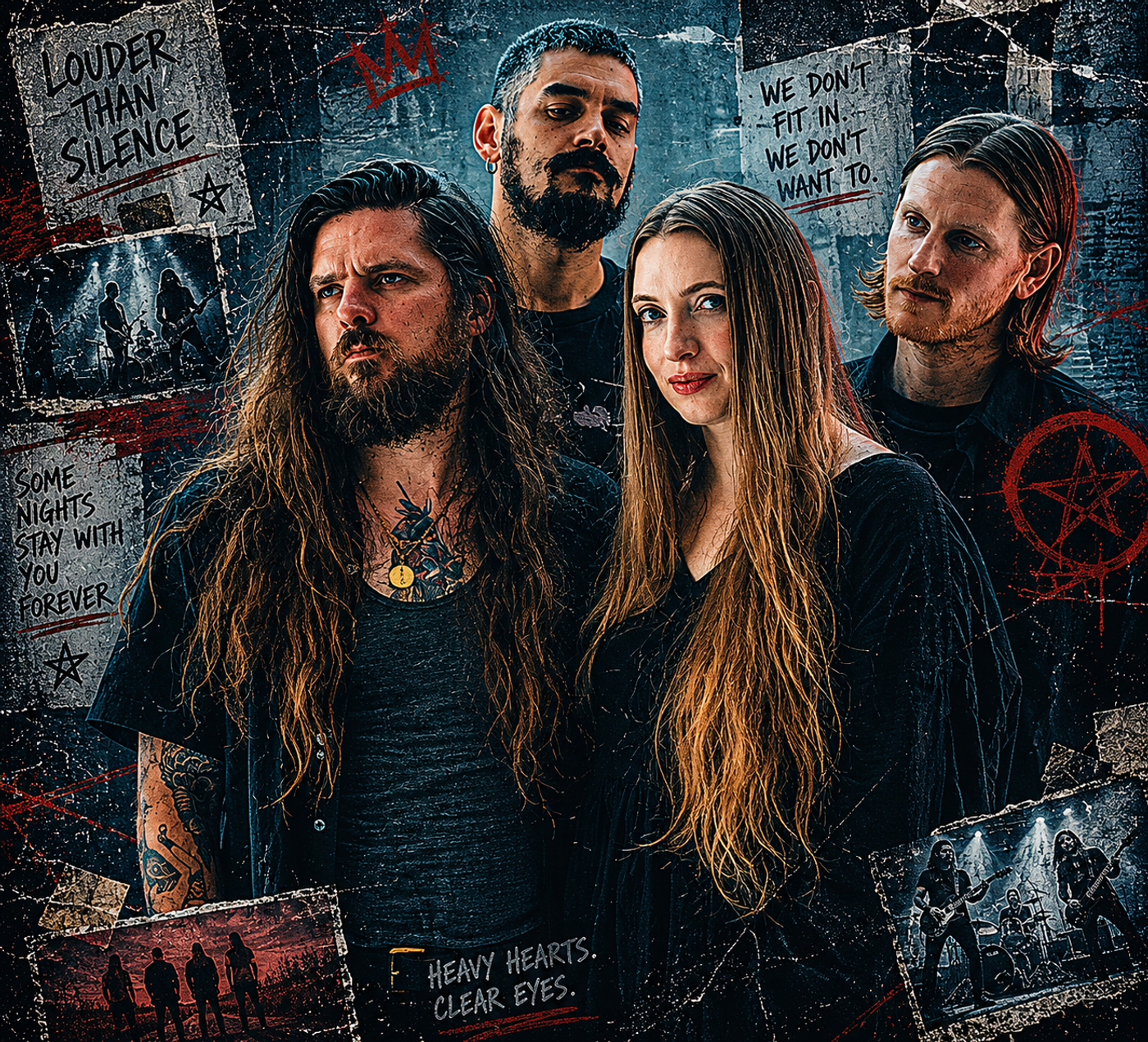
The problem with Stumpwork was never Florence Shaw's voice. It was that John Parish kept treating it like something delicate, something that needed careful placement in the mix like a fragile sculpture in a room full of guitars. Parish, who has built his career on making PJ Harvey sound enormous and Aldous Harding sound strange, approached Dry Cleaning with restraint when the band needed someone to push back. The guitars on Stumpwork were clean to the point of sterility, the drums mixed like they were apologizing for being there at all. Shaw's spoken word delivery, flat and observational, floated over arrangements that sounded like they were designed not to distract from her. That is exactly backward. The voice is not the main event. The tension between the voice and everything else is the main event.
Cate Le Bon understood this immediately. Secret Love, released this January on 4AD, sounds like someone finally gave Dry Cleaning permission to be a rock band instead of a post punk tone poem. Le Bon, recording at Black Box Studios, did what Parish would not: she made the band sound physical. The drums on Hit My Head All Day have actual weight, the kind of thud that makes you aware of the room they were recorded in. The guitar tone on Cruise Ship Designer has grit, the slight breakup that comes from pushing an amp past where it wants to go. Le Bon brought in Bruce Lamont to play saxophone on Let Me Grow and You'll See the Fruit, and instead of treating it like an ornament, she let it sit in the same sonic space as Shaw's voice, two non melodic elements fighting for dominance. That is what Dry Cleaning needed two albums ago.
The lineage here is obvious if you have been paying attention. Dry Cleaning descends directly from The Fall, the same flat affect over motorik rhythms, the same refusal to sing when speaking will do. But where Mark E. Smith was confrontational, Shaw is observational, delivering lines like a museum docent describing a painting she has seen a thousand times. The Fall comparison only goes so far. The better reference point is Pylon, the Athens band that proved you could make dance music out of angular guitars and a rhythm section that played like they were trying to dismantle funk from the inside. Dry Cleaning has that same rhythmic clarity, the same understanding that repetition is not boring if the details keep shifting. Tom Dowse's guitar work has always had more in common with Michael Lachowski's bass playing in Pylon than anything coming out of the current post punk revival, all locked grooves and minimal decoration.
The question was whether Dry Cleaning could evolve past the initial concept. New Long Leg worked because the format was new, Shaw's delivery unexpected enough to carry ten tracks. Stumpwork tested that theory and came up short. Too many songs sounded like variations on the same idea, Parish's production so consistent it became invisible. The Grammy for Best Recording Package was deserved, the album was beautifully presented. But a Grammy for packaging is what you win when the music inside is not quite good enough to win anything else.
Secret Love answers the question by changing the terms. The ceiling was never Shaw's voice. The ceiling was the assumption that her delivery required a specific kind of minimalist backdrop, that anything too assertive would overshadow the words. Le Bon proved that wrong by making Secret Love the loudest, most physically present record Dry Cleaning has made. The mix on Secret Love puts Shaw's voice in the room with the instruments instead of hovering above them. You can hear the air moving. That is production.
The band is still capable of writing themselves into corners. Rocks and The Cute Things feel like Stumpwork outtakes, the arrangements too polite, the rhythms too predictable. Evil Evil Idiot works because the title is absurd and Shaw leans into the absurdity, but it also highlights the limitation of the format. Every Dry Cleaning song is essentially a monologue with accompaniment. That structure requires either perfect writing or production inventive enough to make you forget you are listening to the same trick again. Le Bon provided the latter on most of Secret Love. Parish did not provide it at all on Stumpwork.
Dry Cleaning rescheduled their North American tour in December, citing hostile economic forces. Translation: they are a mid level band playing to mid level crowds in an industry that no longer supports mid level bands. They will be fine in the UK and Europe, where festivals still book acts like this and venues still exist at the right size. But the ceiling in America is real, and it has nothing to do with Florence Shaw's voice. It has to do with the fact that post punk without hooks is a hard sell in a market that wants songs for playlists. Dry Cleaning does not make songs for playlists. They make albums for people who still listen to albums front to back. That audience still exists. It is just not growing.
More Rock
- Molly Hatchet Shares a "JacksonVillain" Lyric Video
- Make Them Suffer's "Black Sheep" Is Out, With a Video
- From Ashes to New's Reflections Deluxe, With "After Death"
- King 810's "Simulacra Simulating" Video Is Out
- GrimmING Announce Debut Album Jagatod, Share "Pankh" Video
- New Vision Share "Still Losing" Video Ahead of Can't Leave With Less