Tobe Nwigwe's THE BRIDGE Has Kizzo's Name on All 12 Tracks
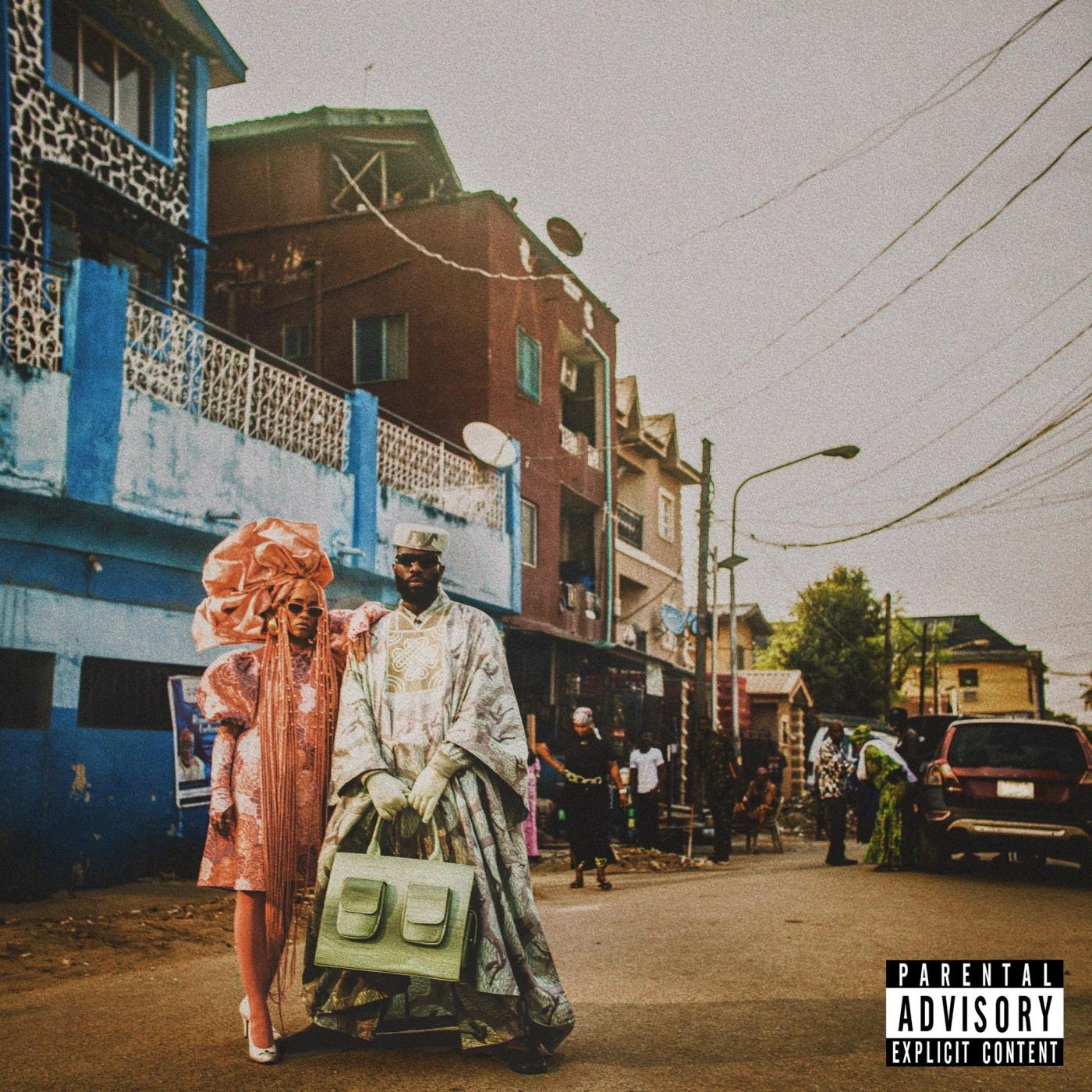
Who produced THE BRIDGE? Apple Music lists Tierce "Kizzo" Person and Tobe Nwigwe as producers on all 12 tracks.
Tobe Nwigwe's name is on the cover of THE BRIDGE, and his is the only name on the album's artist line that isn't a guest. Open the song credits on Apple Music and a second name shows up on every one of the 12 tracks: Tierce "Kizzo" Person, listed as a producer on all 12 next to Nwigwe, and as a songwriter on all 12.
The verdict, up front: on paper this is a two-man album, and the paper backs the word the album's own press release chose. That release calls it their "collaborative album" in its first paragraph. The credits show what that meant in practice.
The paper first
The basics come straight from Apple. THE BRIDGE came out October 9, 2026, with 12 songs. The ℗ line reads "℗ 2026 Tobe Nwigwe LLC, exclusively distributed by Human Re Sources." The recording belongs to Nwigwe's own company.
The guest list is long: Busta Rhymes, The Cavemen., Fat Nwigwe, Sia, K CAMP, Adekunle Gold, Labrinth, Flavour (with C.S. Armstrong), Paul Wall, Jay Electronica, Scarface, ODUMODUBLVCK, Hanumankind, Malice, Jacob Banks, FirstKlaz and Infinity Song. Kizzo is on none of those artist lines. That's normal for a producer. What isn't normal is how much of the paperwork he is on once you go one click deeper.
Who is Kizzo?
The press release introduces him as a Grammy-winning producer born and raised in Amsterdam, who moved to Los Angeles for music, stepped away to care for his mother during her cancer treatment, and later won Album of the Year for his work on Jon Batiste's We Are. Grammy.com's page for the 64th Grammys lists Kizzo among the credited contributors on that winning album.
In a July interview with The Hype Magazine, writer Dr. Jerry Doby reports that Kizzo was raised in a Surinamese household. The piece also lays out how he sees the job. In Doby's paraphrase, producing means staying involved from the earliest idea through writing, arranging, recording, mixing and mastering. Hold that definition up against the credits below. It fits closely.
On the split, the press release is direct: "The project is produced by Kizzo in close creative partnership with Nwigwe, with both serving as executive producers." Apple's song pages back the first half of that sentence. They list no executive producers at all, so that credit rests on the press release.
What Apple lists for Kizzo
Go through Apple's 12 song credit pages and the tally is simple. Kizzo is a producer on 12 of 12 and a songwriter on 12 of 12. He is an assistant mixing engineer on 11 of 12, and on one of those songs he also carries a full mixing engineer credit. He has a drum machine credit on 10 of 12, and an instrument credit of some kind on the same 10. Across the album, Apple also lists him on drums, bass guitar, organ, piano, keyboards, synthesizer, guitar synthesizer, electric guitar and horn.
Apple doesn't file his name one way. Most pages read Tierce "Kizzo" Person. Two songwriting lines read "Tierce Person." On "PERFECTION," the producer line reads just "Kizzo."
Taken together, Apple's record puts him in the writing, the playing and the mix on nearly every song, well past the job of sending over beats.
The rest of the room
Credits stories can turn into one-man stories, and that would be wrong here. Nwigwe has a producer credit on all 12 tracks, and Apple's album page lists him among the composers on all 12. The individual song pages show his songwriter credit on only three. Apple's two views don't agree, and I'd treat that as a filing gap, not a statement about who wrote what.
The crew under them is steady. Dorothy Chan is a recording engineer on all 12. Jonathan 'D' Coutrier-Owens has an engineering credit on all 12, spelled "Cortrier-Owens" once. Jesse Ray Ernster mixes 11, with Jackson Haile assisting. The ReChoirMINTs appear on six songs, and Madicin is the vocal arranger on six.
"PERFECTION" is the outlier. It's the one song where Manny Marroquin mixes, Ramiro Fernandez-Seoane assists and Zach Pereyra gets a mastering credit, the only one on the album's Apple pages. The press release set it as the second single, out July 17.
Apple's songwriter lists also carry other names, among them Ebo Taylor, Pat Thomas, Teddy Osei and Gyedu-Blay Ambolley. In my reading, that's where the album's stated roots show up on paper.
Tobe Nwigwe and Flavour: PERFECTION (feat. C.S. Armstrong)
What they said they were building
Nwigwe has been clear about the map. To WYSO, he said the music is meant to "expand from not only the southwest side of Houston, Texas, but all the way back to Nigeria." WYSO reports he built the album with highlife as one of its foundations. In his statement to Vibe, he put it in family terms: "Growing up in Houston as the son of Nigerian immigrants, I learned over time that none of those identities were ever in conflict but are all part of the same story."
Apple Music's editorial notes say he was "born and raised in Alief, Texas," with parents from the Igbo people of southeastern Nigeria. In my view, that Houston spine is why a Paul Wall verse here reads as more than name value.
Local coverage has long placed him there too: the Houston Chronicle and Houstonia both describe him growing up in SWAT, Southwest Alief, Texas.
Kizzo's account matches. Doby reports that the two "studied highlife, Afrobeat and older Nigerian records" alongside the weight and storytelling of Houston rap. In the press release, Kizzo says the album is about "connection in the purest sense" and adds: "I've lived between worlds my entire life, and this project gave us the space to turn that experience into something honest."
Doby's piece also holds the one documented production choice on the record. Doby writes that Kizzo shaped the bass line of "ALL OR NOTHING" to carry the feeling of a Bill Withers song. That's the producer's intent as reported, not my description of the track. Apple's credits for the song list Kizzo on drum machine, synthesizer and keyboards, with Timothy Mckenzie also on synthesizer and as a co-writer, and Michael 'Fish' Herring on guitar.
Tobe Nwigwe and Labrinth: ALL OR NOTHING
How the sound has been described
Two sources, on the record, describe the sound. Apple's editorial says "production and song structure are persistently layered, deliberate, and dance-ready." Writing for The NATIVE in August, with two singles out, Dennis Ade Peter called "PERFECTION" "a slapper that blends Nigerian Funk with southern Crunk and Blues." Read against the credits, both lines point the same way. If the production is the headline, the production credit is the story, and on every track it carries two names.
Why the depth matters
Here is my opinion, plainly. Credits are the most honest page of an album, because they're filed, not pitched. A press release can call anything a collaboration. Apple's song pages are where you can test the word, and on THE BRIDGE it holds. Kizzo is producer and writer on all 12 tracks, plays on 10 and sits in the mix chain on 11. That is the profile of a co-author.
It also changes how the guest list reads. Seventeen acts appear across these 12 artist lines, from Paul Wall, an "H-Town legend" in Apple's editorial, to Sia and Labrinth. That many guests can turn a record into a playlist. The credits suggest why this one holds together on paper: the same two producers, the same engineering crew and, on 11 of 12 songs, the same mix engineer. In my view that consistency is the real bridge.
The paper isn't perfect. One song files him under a single word, two writing lines drop his nickname, and Apple's album and song pages disagree on Nwigwe's writing credits. None of that changes the count. It's still worth fixing, because a name spelled three ways is harder to find later.
The album sits in the October entries of our running list of Houston rap releases, and the pattern is familiar from KAZI's Houston coverage. We gave Izzy Garza at Barron Studios the same credits-first read earlier this month, and we profiled Maiya Papaya's Houston DJ business in June. The city's records keep getting made by more people than the cover shows.
Tobe Nwigwe and Labrinth: ALL OR NOTHING (Official Music Video)
Where to start
Start with "ALL OR NOTHING." It came out first, on June 5, and it's the one song where the producer went on record about a specific choice. Watch the video, then open the credits and count how many lines carry the same name. Then play the album front to back with the credit pages open. It's the best way I know to see what "collaborative" means when it's real.
Verdict: On the record's own paper, THE BRIDGE is Tobe Nwigwe and Kizzo's album in equal measure, and the credits earn the word collaborative. Start with: "ALL OR NOTHING".
More Hip-Hop
- Datkid's "Lead By The Blind" Is Produced by Illinformed and Dumb Logic
- $lim Gucci and Comehelpglo Set "SESHA" for November 20
- Kid Yugi Holds No. 1 in Italy With "Sentire la Musica"
- Tyga's "Balcony" Is Out With an Official Video
- Hurricane Wisdom "BRABUS MUSIC" Video Arrives With Single
- IDK Partners With Shady Records and Interscope