Malloy James Season 1 Review: A Sound Designer Builds a Year Out of Scenes
The short answer
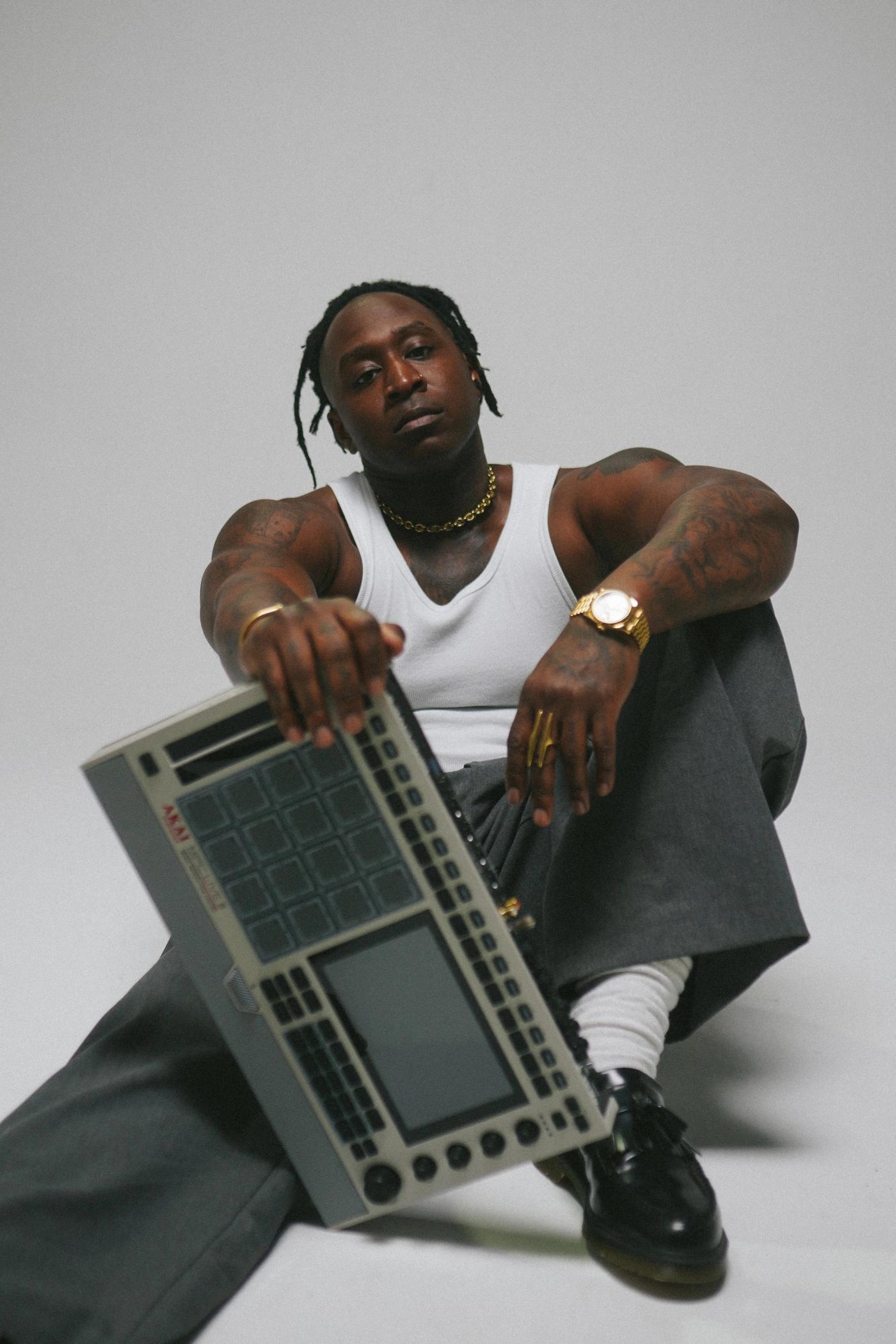
Malloy James' Season 1 is a tight, 35-minute memory map made by one person, and it is the clearest proof yet that his installation work and his rap records come from the same toolkit. The Harlem-based composer and rapper released it on October 23, 2026, the same day as its guitar-led companion, Season 2. Apple Music lists 12 tracks and a running time of 34:53, under ℗ 2026 North Note Recordings. My verdict: a sharp concept record whose short scenes sometimes leave you wanting a longer take.
One name on the credits
Open the song credits on Apple Music and the same name comes back on every line. Malloy James is listed as performer, songwriter, producer and engineer on all 12 tracks of Season 1, and on all 12 of Season 2. The only other credit across both records belongs to Basil (Bugsy) Debnam, who sings background vocals on "Sunset Roof." There are no featured artists.
To me, that is the real story of the record. KAZI has written about one name on the board from production to master before, and the logic holds here: one ear makes every call. In rap it is rarer still. Even an artist as hands-on as Sampa the Great split her album's production with Cadenza and others.
For James, it is also a habit. His official site says Something Died When You Left was "entirely produced, written, composed, mixed, and mastered by James himself," and calls The Shallows his "first major project featuring mixing, mastering, production, composition, and arrangement exclusively by Malloy James."
The sound designer's method
James did not come to rap records from the beat scene alone. Per twnty three's release, he is "Trained in classical composition and sound engineering," and his other work includes runway sound design for Stance and Balenciaga during New York Fashion Week, compositions for the jewelry house Repossi and a collaboration with architect Suchi Reddy and the Brooklyn Botanic Garden. He told Alt Revue that much of that work "doesn't have to be 'Malloy James' up front."
He explained the crossover to Mundane: "Sound design was the harder discipline, because you have to tell a story without words. The chords, the keys, the instruments have to carry every phrase." He also said, "Sound is tied to memory more closely than any other sense," and, "I want these songs to be places people can visit, where their memories mix with mine."
On paper, Season 1 is built like an installation: a series of rooms, not a plot told in order.
Scenes instead of dates
James laid out the concept in twnty three's announcement. The album, he said, "feels like remembering a year of your life through scenes instead of dates: Rooftops at sunset. Late nights in New York. Gelato somewhere in Rome. A duffle bag half-packed on the floor."
The tracklist takes that list almost literally. "Sunset Roof," "Margiela Duffle" and "Gelato In Rome" are three of the first four songs. The scenes are short, too. Eight of the 12 tracks run under three minutes, and "Rings" is the briefest at 2:19. Only the opener, "Pilot ep.1" (4:51), runs past four minutes.
The TV framing goes past the album titles. Season 1 opens on a pilot. Season 2 ends on "Our Show (Season Finale)." Taken together, the pair runs 24 episodes in about 71 minutes. To me, that framing is the smartest decision on the record, because it turns a run of brief songs into a sequence with a premise.
Luxury and heartbreak
The titles keep returning to fashion houses: "Margiela Duffle," "Crying In Chanel." That thread runs back through his catalog to the Brunch With Chanel EP, which Apple Music dates to 2021. In Mundane, James put the tension plainly: "You're in Paris during fashion week, surrounded by beautiful people and buildings, and that's exactly where you feel the anger, the sadness, the ambition." And: "You can be at the highest high with someone, experiencing the smoothest luxuries, and have her break your heart in the same week."
In twnty three's release, the Season 1 palette is "dusty soul samples, swinging percussion, airy synths, and a supple 808 thump," and the album is a "suave but sentimental boom-bap Bildungsroman." That is the publicist's pitch. The credits can't confirm the sound, but they do confirm whose call it was: James is the only producer listed on all 12 tracks.
"Sunset Roof" is the thesis
"Sunset Roof" came out as the first single on August 25, 2026, and twnty three's announcement called it "a love-addled missive on rom com-level infatuation set to an evaporating, jazzy stagger of a beat." James told Mundane "the details are real: the color of the sunset on the roof, what was said, what wasn't." He directed the video for the same reason: "I wanted to build the house, the light and the roof myself, so you could walk through the memory with me."
Malloy James, "Sunset Roof" (Official Music Video)
Where Season 2 fits
"Season 1 lives in rap, samples and piano," James told Mundane. "Season 2 gives rock and alternative the space they deserve." For Season 2, twnty three's release lists "alternative guitars, acoustic textures, distorted synths, live bass, and flashes of N.E.R.D, The Neptunes, Q-Tip, John Mayer, and '90s alternative rock." Of its single "You There?," he told Alt Revue, "That's just me on my old drum kit in my studio."
The guitar half is not a pivot from nowhere. "One of the first songs I ever put out, 'Death Can Wait,' was rap over guitar," he told Mundane, and Apple dates that single to July 25, 2020. He framed the order of the pair as a lesson: "Season 1 is a box I chose, and I went so far into it that it gave me the confidence to experiment on Season 2. I learned the most in the space between the two."
What holds it back
The one-man method has a cost. With no outside producer and no guest, there is no second voice in the credits to break the frame. With eight songs under three minutes, the format favors glimpses over development. That is the point of the concept, and also its limit. The fashion-house imagery is familiar from his earlier titles, so the luxury and heartbreak theme lands as a signature more than a surprise. I would trade two of the sub-2:30 vignettes for one more track with the length and room of "Pilot ep.1."
The bottom line
Season 1 is the most complete statement yet of what Malloy James does: he designs spaces, then raps inside them. Paired with Season 2, it plays as one season in two halves, and the credits make it his alone.
Verdict: A tightly framed, fully self-made rap record that turns a year of memories into scenes. Start with: "Sunset Roof".
More Hip-Hop
- Kid Bookie's Cheaper Than Therapy II: Who Made the Rap-Rock Sequel
- KaMillion Wus Up: The Rap Sh!t Star Resets With a Shawntbeatz Single
- That Mexican OT CUCUY Review: A Halloween Album Built on a Tejano Boogeyman
- Maliibu Miitch Sailor Goon Tracklist: 10 Songs With Rich The Kid, Lady London and Ms Hustle
- Who Produced Sampa the Great's Nu Zamrock? Cadenza, Solomon Moyo and Sampa Herself
- Doechii's "LOCK JAW" Swamp Session: The Credits Behind All Three So Far