Len Faki and the Berghain Credibility Problem
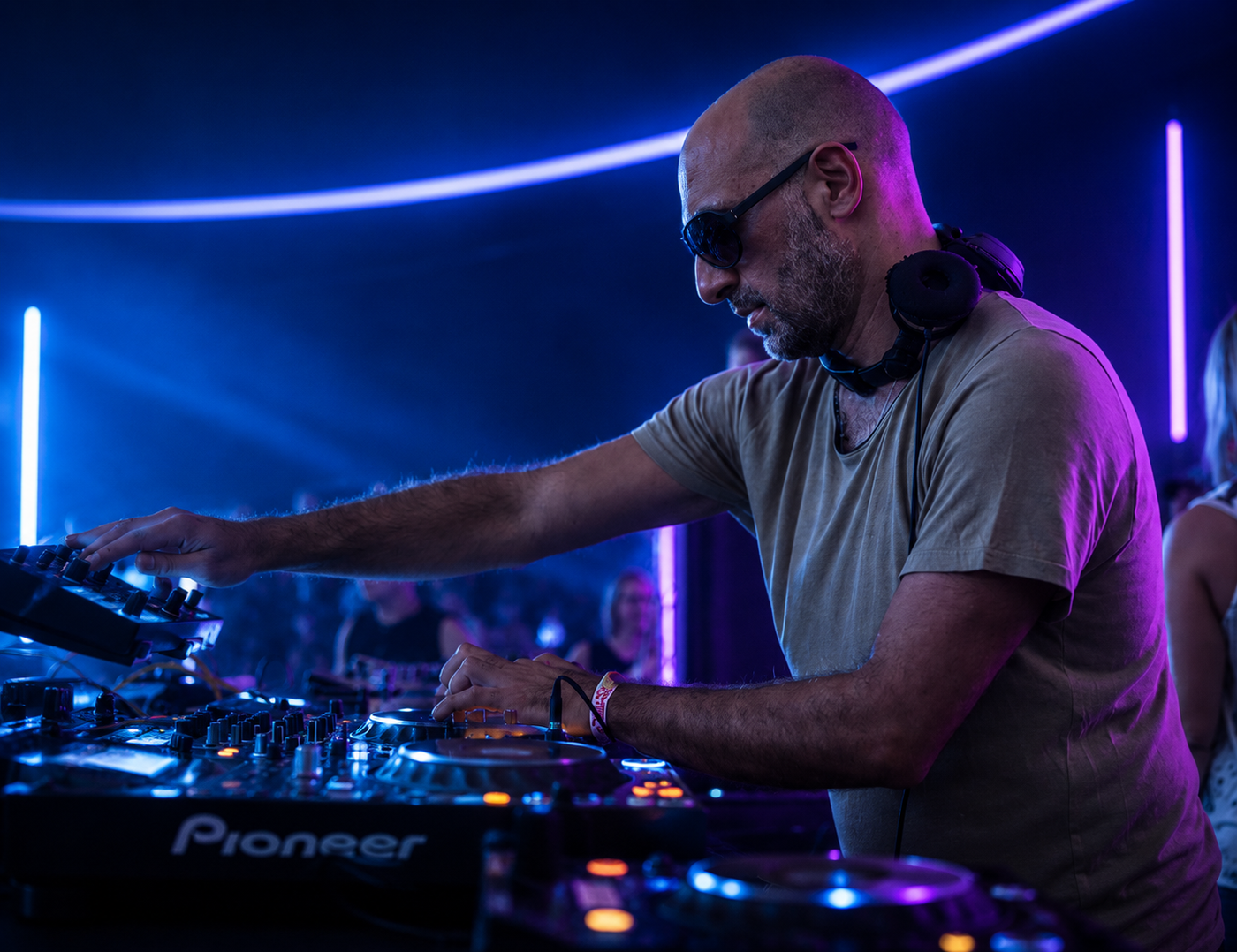
The Berghain floor at 6AM used to mean something specific. Not the Instagram mythology version, not the door policy folklore, but the actual sound coming through the function one. Hard, structural, patient techno that understood arrangement as architecture. Len Faki has been a resident there since 2004, back when the venue was a destination for people who cared about mixing technique instead of a press bio line item for DJs who played it once on a Wednesday. Now in 2026, with Figure label sitting at over 150 releases and a new Zera EP that just dropped in April, the question is whether Faki's two-decade investment in Berlin's supposed techno capital still carries the weight it built, or if Berghain's cultural authority has been diluted by every mediocre progressive house act listing it as a career highlight.
Zera is five tracks of the same synthesis approach Faki has refined since the mid-2000s. Ableton Live running Max For Live sequencers, specifically the MDD Snake based on Make Noise's René Eurorack module, building patterns from an enormous sample library he has spent years accumulating. Grooves, hi-hats, percussion, drums, all edited by hand. This is not laptop techno in the pejorative sense. This is construction work. The title track sits around 132 BPM with a filtered bassline that opens every sixteen bars, classic call and response between kick and synth stab. Maschine Girl uses the same structure but pulls the filter sweep tighter, more Munich than Berlin. The Hardspace mix of Zera adds a breakbeat undercurrent that briefly flirts with jungle before committing back to four-to-the-floor orthodoxy. Technically accomplished. Historically literate. Predictable.
Faki came up through Stuttgart's scene in the late 1990s, launched Monoid in 1997, Feis in 1999, Figure in 2003. His 2007 Ostgut Ton release Rainbow Delta and Mekong Delta became one of the era's defining tracks because it understood that hypnotic did not mean static. The arrangement moved. It built and stripped and rebuilt over eight minutes without ever announcing itself. That track earned the Berghain residency. Two decades later, the residency carries more cultural weight than any individual set he plays there. The venue became the credential, and Faki became the institutional presence that legitimizes it for people who never heard him play before smartphones made documentation compulsory.
His extra-long Berghain sets force tonal variation, which means he cannot rely on the same 135 BPM hammer for six hours. That should push the sound forward. Instead, recent output like the Zig Zag EP from last May plays it safe across familiar templates. Zig Zag itself is fine, a Roland 909 workout with acid bass that any competent Berlin producer could have made in 2015. Loop 10 with Jeroen Search and UBX127 adds modular textures but never risks the arrangement falling apart. Morgana with Jancen is the most interesting track on the release because it slows to 128 and lets negative space do the work, but even that pulls back before it could get genuinely uncomfortable.
The problem is not that Len Faki makes bad techno. The problem is that he has spent twenty years inside a venue that was supposed to represent uncompromising sound, and his production has calcified into competence. His Fusion album from 2023 tried to break out with electro, downtempo, drum and bass, synth pop, but the genre tourism felt like a mid-career artist checking boxes rather than genuinely exploring new synthesis territory. The follow-up remix series watered it down further. Figure label has released 150 records, which is an impressive operational achievement and a curatorial problem. When your discography is that deep, every release needs to justify why it exists instead of being catalog filler.
Berghain still books interesting DJs. Faki is still technically skilled. But the venue's reputation now functions as a marketing asset for the global festival circuit, and his residency props up that mythology without challenging it. The culture moved. Detroit never stopped innovating. London keeps fracturing into new bass mutations. Faki stayed in the room, building the same structures with better tools, waiting for people to remember why the room mattered in the first place. That is not leadership. That is maintenance.
More Electro
- Rochelle Jordan's Disc 4 EP: Remixes by Louie Vega, Holly and More
- Nitsa Club and Primavera Bits Launch Nitsa PM With Folamour
- Hiroshi Yoshimura's Quiet Forest Returns for Its 30th Anniversary
- Lost Frequencies, Gryffin Share "Wait All Night" With Michael Marcagi
- Becky Hill's Album REBECCA Is Out Now
- Anyma Sets ÆDEN Millennium at Giza, March 19 and 26, With Jarre