Fred again sold out Alexandra Palace four nights running and the floor was full of people filming
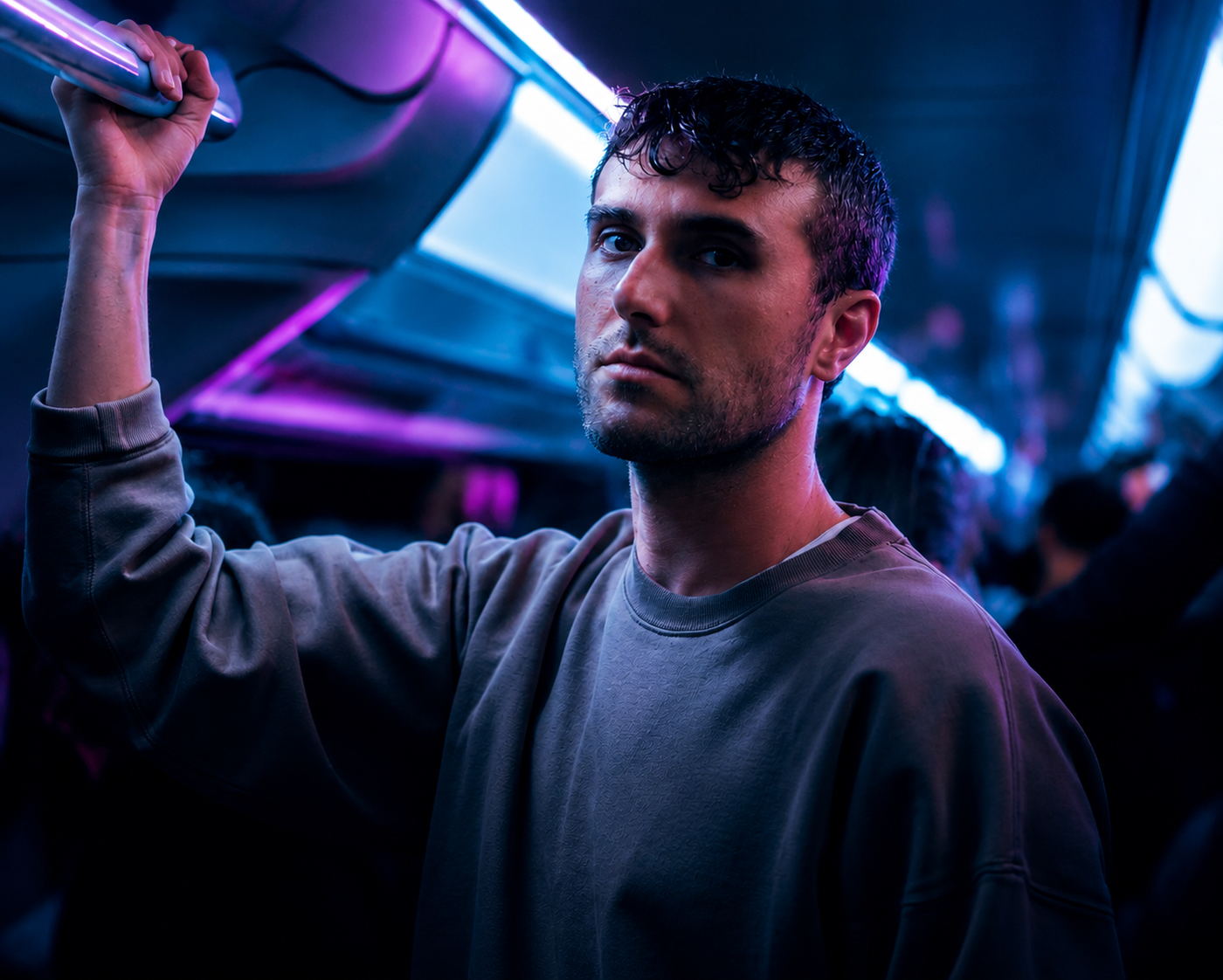
Fred again closed his Alexandra Palace residency in February with Thomas Bangalter behind the decks for a back to back set, Bangalter's second DJ appearance in twenty years, and the room lost its mind in a way that had nothing to do with the music and everything to do with the fact that someone from Daft Punk was standing there. This is what Fred again has become in 2026. A context where the guest list matters more than the track selection, where the occasion overwhelms the function, where Madison Square Garden and Alexandra Palace operate under the exact same logic as a bedroom producer uploading to SoundCloud except the bedroom now holds four thousand people with their phones out.
The production signature is still there. Vocal chops processed through granular synthesis, breakbeats pulled from UK garage's two step grid but slowed to 126 BPM so American festival crowds can follow them, bass lines that sit in the 808 pocket without ever committing to it. Fred again builds tracks like someone sampling his own life, which was the concept behind the Actual Life trilogy and remains the concept behind the USB series. He records Angie McMahon live in London, chops her voice into a four bar loop, wraps it in Juno pad swells and calls it a song. He takes John Martyn's Sweet Little Mystery, which is a folk song, and runs it through the same laptop processing that turned Dermot Kennedy and The Blessed Madonna into chart movements. The technique is consistent. Ableton Live, tactile and immediate. No hardware fetish, no modular worship, just a laptop and a belief that emotion translates if you slice it thin enough.
The lineage runs through UK garage by way of Burial, through Ed track's blog house moment by way of Erol Alkan, through Bonobo's live band electronica, through Bicep's festival ready ambient techno. Fred again sits in the space where UK club music went overground, where Four Tet and Skrillex stopped being underground and started being Coachella. He shares studio time with Brian Eno, collaborates with Skepta, works with Berwyn and Headie One and Jamie T, moves between grime and house and breakbeat like genre is a Spotify playlist and not a city with a postal code. This is the first generation of UK electronic producers who never had to choose between the club and the algorithm, who built their audience on TikTok and Instagram before they ever played Fabric, who understand that virality and longevity are not opposites if you move fast enough.
But here is what Fred again does not do. He does not build tension. He does not make you wait. Every track resolves in two minutes, every vocal chop pays off before you've had time to want it, every breakdown lands exactly where you expect it to because the structure is verse chorus verse and the drops are mathematically spaced for dopamine. There is no negative space. There is no room to get lost. The USB002 tour released a 108 hour continuous mix, which sounds like an ambient experiment until you realize it is just every show stitched together, which means it is not a mix in any traditional sense, it is a document of a tour. The club does not work this way. The club requires silence, requires the moment when the kick drops out and you are standing in a dark room with two hundred people and no one is filming because there is nothing to film except the feeling of waiting for the bass to come back.
Fred again won a Grammy for Actual Life 3, got shortlisted for the Mercury Prize for ten days, sold out Alexandra Palace four times in two weeks, pulled Skream and Benga and Mala out of dubstep retirement for a nostalgia set that The Guardian called an eclectic triumph. He has done what every underground producer says they do not want to do, which is make electronic music that works in stadiums, that translates on festival main stages, that plays on daytime radio. Calvin Harris has played that circuit across North America for 18 years, and his first headline tour here now runs to 35 arena dates in 2027. The question the scene will not ask out loud is whether that translation required losing the thing that made the music matter in the first place. Whether a room full of four thousand people filming a back to back with Thomas Bangalter is a dance floor or a spectacle. Whether bedroom production was ever supposed to leave the bedroom at all, or whether the whole point was that it stayed small, stayed immediate, stayed in a room with no cameras where the only thing that mattered at 4AM was whether the person next to you was moving.
More Electro
- Rochelle Jordan's Disc 4 EP: Remixes by Louie Vega, Holly and More
- Nitsa Club and Primavera Bits Launch Nitsa PM With Folamour
- Hiroshi Yoshimura's Quiet Forest Returns for Its 30th Anniversary
- Lost Frequencies, Gryffin Share "Wait All Night" With Michael Marcagi
- Becky Hill's Album REBECCA Is Out Now
- Anyma Sets ÆDEN Millennium at Giza, March 19 and 26, With Jarre