Doja Cat Finally Sounds Like She Wants to Be Here
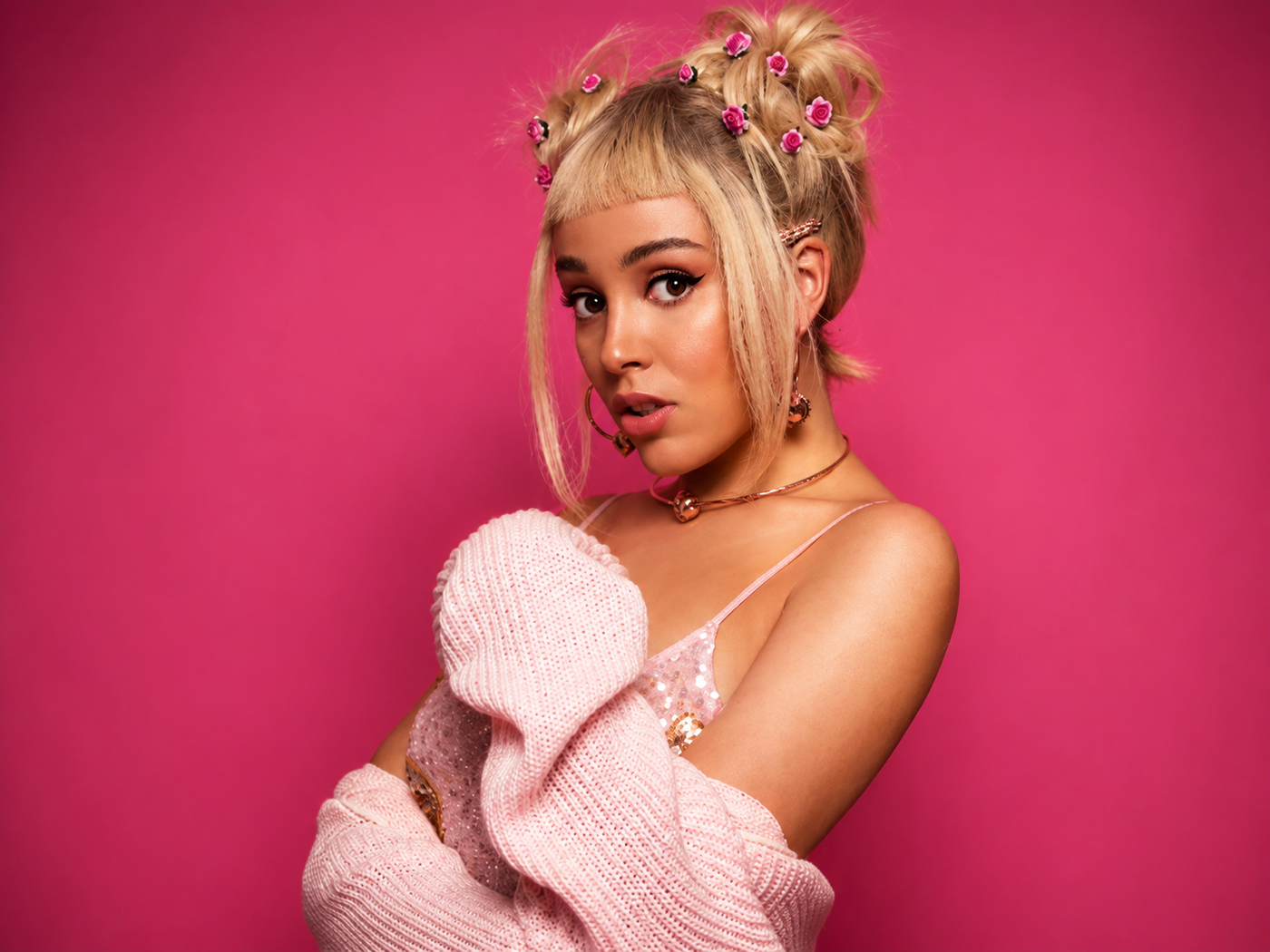
When Doja Cat performs "Jealous Type" with Kenny G at the VMAs, what you are watching is not just a pop star making a comeback. You are watching someone who spent two years trying to reject the machinery of pop success finally figure out how to use it on her own terms. Vie, her fifth album, debuted at number four on the Billboard 200 in September 2025 with 57,000 units. Not massive numbers but steady ones, the kind that suggest an artist who has found a sustainable lane after publicly burning down the last one.
The Scarlet era was Doja Cat trying to will herself into a different category. She wanted to be taken seriously as a rapper, rejected the pop label entirely, and made an album that felt more like a thesis statement than a collection of songs. The problem was not that Scarlet was bad. The problem was that it asked fans to forget everything that made Doja Cat magnetic in the first place. The internet fluency, the genre hopping, the willingness to be ridiculous and brilliant in the same 16 bars. Scarlet peaked at number four too, same as Vie, but it felt like a ceiling. Vie feels like a foundation.
What changed is that Doja Cat stopped fighting the pop machinery and started customizing it. Vie is a pop album, no question, but it is pop filtered through funk, disco, and 80s synthwork in a way that gives her room to move. Jack Antonoff shows up as a producer, which in 2025 is practically a pop legitimacy stamp, but so does Y2K, who helped make "Paint The Town Red" the most streamed female rap song of the 2020s on Spotify. SZA appears on "Take Me Dancing," a callback to "Kiss Me More," which has 2.4 billion streams and remains Doja Cat's commercial peak. These are not random collaborators. These are receipts that say Doja Cat knows exactly what works and is willing to build around it.
"Jealous Type" held the number one spot on the Billboard Global 200 for four consecutive weeks. That is not a fluke. That is a song engineered to work across markets, and it does, landing Vie in the top ten in the US, UK, Australia, and New Zealand. The aesthetic rollout matters too. Doja Cat teased the album through a Marc Jacobs campaign, performed at Outside Lands, and built a visual world around neon, funk, and a modernized 80s palette that feels distinct in a year where everyone else is chasing Y2K nostalgia or hyperpop fragmentation. She is working in the past but not trapped there.
The honest take is that Vie is not pushing pop forward. It is consolidating what Doja Cat does well and making it coherent again. The singles are not streaming like Hot Pink or Planet Her, and the 57,000 first week units put her behind where she was in 2021. But that is the floor, and the floor is still a top five debut with a global hit and a Live Nation world tour that includes Australia and multiple regions. Doja Cat is not chasing a breakthrough moment because she already had it. She is figuring out how to sustain a career after publicly rejecting the thing that made her famous.
What makes Vie culturally significant is that it models a new kind of pop pivot. Most artists who try to go left after a massive commercial run either fail (see: Katy Perry's Witness) or succeed by disappearing into a new genre entirely (see: Beyoncé's Cowboy Carter). Doja Cat is doing neither. She is staying in pop but redefining what pop stardom looks like for someone who came up through memes, survived cancellation cycles, and built a fanbase that expects her to be unpredictable. The 80s aesthetic is not just nostalgia. It is a way to signal maturity without losing the weirdness. The Jack Antonoff production is not just a cosign. It is a way to access pop radio credibility without sounding like everyone else on pop radio.
The Tour Ma Vie World Tour is her biggest run yet, her first time headlining across multiple regions, and the proof that Vie is working as a reset. She has 37 million Instagram followers, 64.5 million certified units sold in the US as a lead artist, and a track record that says she can pivot without losing the base. The question after Scarlet was whether the industry knew what to do with an artist this creatively unpredictable. The answer, as of 2026, is that Doja Cat is figuring it out herself. She is not waiting for permission anymore. She is building a version of pop stardom that accommodates her contradictions instead of asking her to resolve them. That is the real story here. Not the chart position. The autonomy.
More Pop
- Honey Bxby Releases "Care For Me" on Warner Records
- Ubisoft Reveals Rainbow Six Siege Operation Vital Signal
- AI-Generated Artist Xania Monet Wins Three Top AI Music Awards
- KEM and Robert Glasper Release "Love Calls (The Alkemy Session)"
- Fantasia Says Her Next Album Will Be Her Last
- GTA VI: The Album Track List Leak Names Lana Del Rey and Dua Lipa